A parent dies with a small checking account and almost nothing else. You paid for the funeral out of your own pocket. Now the bank wants a court order before releasing $1,800, and a full probate would cost more than the account holds.
Disposition without administration in Florida exists for exactly that situation. It is not probate. There is no personal representative, no letters, and no court-supervised administration. It is a narrow reimbursement procedure, and most families who hope they qualify actually do not.
What is Disposition Without Administration?
It is an informal request, made by affidavit or petition to the clerk, asking the court to release a decedent’s limited assets to reimburse whoever paid the final expenses.
Under Florida Statute 735.301, no administration is required and no formal proceedings are instituted when the decedent left only:
- Personal property exempt from creditors’ claims under Florida Statute 732.402 and the Florida Constitution, and
- Non-exempt personal property whose value does not exceed the sum of preferred funeral expenses and the reasonable and necessary medical and hospital expenses of the last 60 days of the last illness
Florida Statute 733.707 caps preferred funeral expenses at $6,000 for this purpose. The practical effect is that the non-exempt property must be worth no more than what was actually spent on those qualifying expenses.
Who Actually Qualifies for This Procedure?
The test is narrow, and clerks apply it strictly.
Requirements typically include:
- No real property other than homestead. If the decedent owned non-homestead real estate, this procedure is unavailable.
- Qualifying expenses equal to or greater than the non-exempt assets. You cannot receive more than you paid.
- The person requesting distribution must be entitled to it, generally as the payer of those expenses.
- No administration pending in the state.
- Proper documentation, including the death certificate, paid receipts or bills, and proof of the asset.
The rule that trips up most families is the no-profit principle. If the funeral bill was $2,000 and you paid no medical bills, you cannot receive more than $2,000 in non-exempt property, even if the account holds more. The remainder stays where it is and may require a different proceeding.
What Is the Difference Between the Two Small-Estate Options?
Florida actually has two related provisions, and they are commonly confused.
Florida Statute 735.301 is the general disposition without administration described above, keyed to funeral and last-illness expenses.
Florida Statute 735.304 covers disposition without administration of intestate property in small estates. It applies when the decedent died intestate leaving only exempt personal property, constitutionally exempt personal property, and non-exempt personal property not exceeding $10,000 plus preferred funeral expenses and the qualifying medical expenses. It also requires that the decedent has been deceased more than one year and that no administration is pending. An heir entitled to a share under Florida Statute 732.102 or 732.103 may request distribution by affidavit.
The second provision allows a somewhat larger amount but adds the one-year waiting period and the intestacy requirement.
How Does It Compare to Summary Administration?
Most families who cannot use disposition without administration end up in summary administration instead.
- Disposition without administration is a clerk-level reimbursement request, usually resolved in days to a few weeks, with no personal representative and no letters issued.
- Summary administration is an actual court proceeding under Florida Statute 735.201, available when the estate subject to administration, less property exempt from creditors’ claims, does not exceed $75,000, or when the decedent has been dead more than two years. The court enters an order distributing the assets.
- Formal administration appoints a personal representative who receives letters, and is what banks require for anything complicated.
If the decedent owned a car that needs retitling, non-homestead real estate, or an account larger than the qualifying expenses, disposition without administration will not solve it.
How Do You File for Disposition Without Administration?
The process runs through the clerk of court in the county where the decedent lived, and forms and requirements vary by county.
General steps:
- Confirm eligibility against the statutory limits before spending money on filing
- Gather documentation, including the certified death certificate, itemized paid funeral and medical bills, and a statement of the asset and its value
- Complete the county’s affidavit or petition for disposition of personal property without administration
- File with the clerk and pay the filing fee
- Receive the court’s order authorizing release of the asset
- Present the order to the bank or institution holding the funds
Local clerks publish their own instructions. Families in Northeast Florida can review current probate filing requirements through the Duval County Clerk of Courts or their own county clerk.
When Do You Need Something More Than This?
Call an attorney rather than the clerk if any of these apply:
- The decedent owned non-homestead real property
- The account exceeds the qualifying expenses
- There is a will that needs to be deposited or interpreted
- Creditors are pursuing the estate
- Family members disagree about who should receive what
- The decedent received Medicaid benefits, which can raise estate recovery questions
- You are unsure whether property counts as exempt
Filing the wrong proceeding wastes filing fees and time, and in some cases can create liability for the person who receives assets they were not entitled to.
Using Florida’s Simplest Small Estate Procedure
Disposition without administration gives Florida families a fast, low-cost way to recover funeral and last-illness expenses from a very small estate without opening probate. Its limits are real: no non-homestead real property, no profit beyond what you paid, and no letters of administration to hand a bank for anything else.
If your loved one’s estate is slightly larger or more complicated, summary administration is usually the right next step.
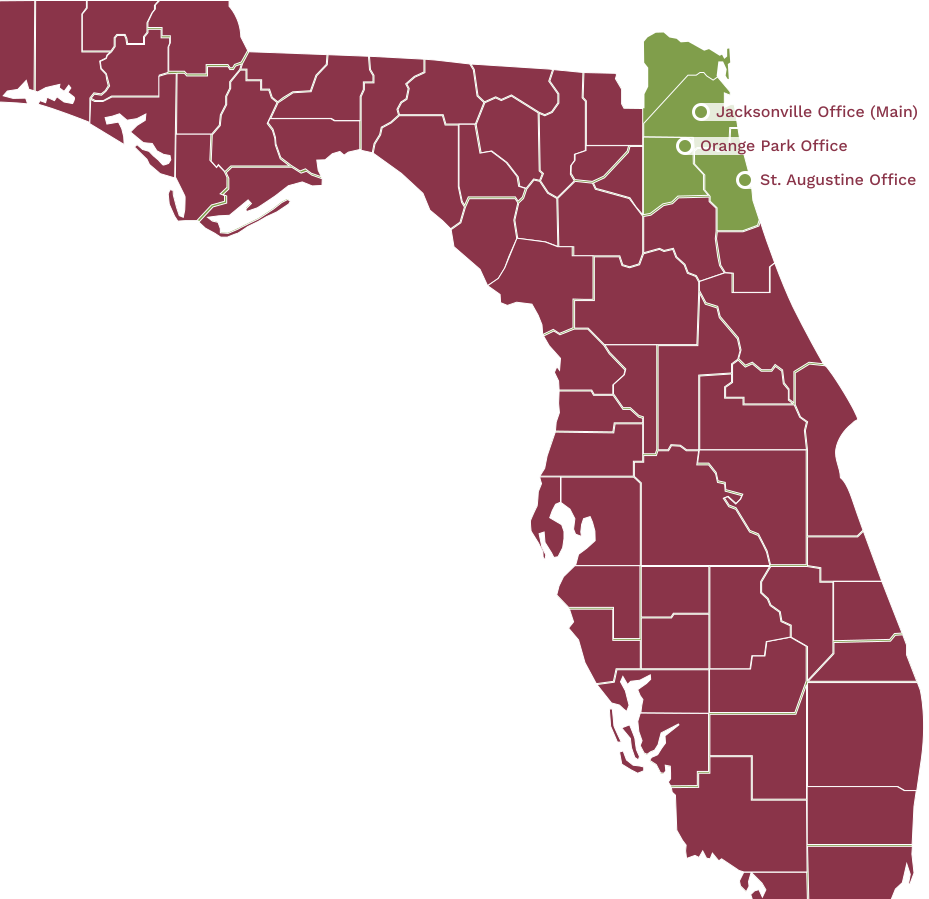
At Berg Bryant Elder Law Group, our Florida Board Certified Elder Law Attorneys help families choose the right probate path across Duval, Nassau, St. Johns, and Clay Counties.
If you are not sure which procedure fits, contact our office and tell us what your loved one owned.
This article is for general information and is not legal advice. Eligibility depends on the specific estate and county practice, so speak with one of our elder law professionals.
Author Bio

Kellen Bryant, Esq.
Founder
Florida Bar Board Certified Elder Law Attorney, Kellen Bryant focuses his law practice on advising and helping caregivers with a particular focus on asset protection and preservation from long-term care costs, creditors, and predators. Kellen Bryant is AV Preeminent® Rated, meaning his attorney peers rated him at the highest level of professional excellence. Kellen Bryant was nominated and selected as a Super Lawyer, Rising Star: 2022.