Families researching guardianship in Florida run into two terms that sound similar and work very differently. Choosing the wrong one can strip rights your loved one does not need to lose, cost thousands more than necessary, and add months to the process.
The difference between a guardian advocate and a plenary guardian in Florida comes down to one question. Does the court have to declare the person incapacitated? For a guardian advocate, the answer is no. For a plenary guardian, the answer is yes, and that single distinction shapes everything else about the two paths.
What Is the Difference Between a Guardian Advocate and a Plenary Guardian?
Here is the short comparison before the details.
- A guardian advocate is appointed for a person with a developmental disability without any adjudication of incapacity. The person keeps all rights except the specific ones the court assigns.
- A plenary guardian is appointed only after a court finds the person incapacitated and unable to perform all the tasks needed to care for their person or property. The guardian then exercises all of that person’s delegable rights.
One preserves rights by default. The other transfers them by default. Florida law treats them as separate processes under separate statutes, with different eligibility rules and different timelines.
What Is a Guardian Advocate in Florida?
A guardian advocate is created under Florida Statute 393.12. A circuit court may appoint one for a person with developmental disabilities who lacks the ability to handle some, but not all, decision-making tasks.
The key features:
- No finding of incapacity. The person is never declared incapacitated by the court.
- No examining committee. The three-member evaluation required in a standard guardianship case does not apply.
- Targeted authority. The court grants power over specific areas only, such as medical decisions or financial matters.
- Rights stay intact. Every right not named in the court’s order remains with the individual.
Eligibility is limited. The person must have a developmental disability as defined in Florida Statute 393.063, which covers conditions including intellectual disability, cerebral palsy, autism, spina bifida, Down syndrome, Phelan-McDermid syndrome, and Prader-Willi syndrome. The condition must have appeared before age 18 and be expected to continue indefinitely.
This is why guardian advocacy is most often used by parents of a child with a developmental disability who is turning 18.
What Is a Plenary Guardian in Florida?
A plenary guardian is defined in Florida Statute 744.102 as someone appointed to exercise all delegable legal rights and powers of the ward, after the court finds the ward cannot perform any of the tasks necessary to care for their person or property.
Getting there requires the full incapacity process under Chapter 744:
- A petition to determine incapacity is filed
- The court appoints an attorney to represent the alleged incapacitated person
- A three-member examining committee evaluates the person, with at least one member being a psychiatrist or other physician
- The court holds an adjudicatory hearing where incapacity must be proven by clear and convincing evidence
- If the court finds incapacity, it enters an order specifying which rights the person cannot exercise
Plenary guardianship typically applies to adults who become incapacitated later in life through dementia, stroke, brain injury, or advanced illness. It is the more restrictive option, and Florida law reserves it for situations where nothing less will work.
Who Qualifies for Guardian Advocacy Instead of Full Guardianship?
The dividing line is the nature and timing of the disability, not the severity of the need.
Guardian advocacy generally applies when:
- The condition is a developmental disability under Florida Statute 393.063
- It appeared before age 18
- The person needs help with some decisions but not all of them
Full guardianship is generally the path when:
- The incapacity comes from dementia, injury, illness, or age-related decline
- The condition developed in adulthood
- The person cannot make decisions across most or all areas of life
A person with a developmental disability who needs comprehensive support may still end up in a Chapter 744 proceeding. The point is that guardian advocacy should be evaluated first when the person qualifies for it.
Which Process Takes Less Time and Money?
Guardian advocacy is usually faster and less expensive, and the reason is structural. Skipping the examining committee removes three professional evaluations, three reports, and the fees that come with them.
In a standard incapacity case, the examining committee members and the court-appointed attorney are entitled to reasonable fees, which are generally paid from the ward’s property. Those costs do not exist in a guardian advocacy case.
Both paths still require:
- A petition filed with the circuit court
- Representation by an attorney, since Florida requires guardianship petitioners to have counsel
- Court-approved training for the appointed guardian or guardian advocate
- Ongoing reports to the court after appointment
So guardian advocacy is simpler, not effortless. It remains a court case with continuing duties.
Why Does Florida Law Favor the Least Restrictive Option?
Florida’s guardianship system is built on the principle that a person should lose no more rights than necessary. This shows up throughout the statutes.
Florida Statute 744.3085 directs courts to consider appointing a guardian advocate where appropriate. Under Chapter 744, a court may not appoint a guardian at all if it finds an alternative that sufficiently addresses the person’s problems. And when incapacity is found, the court may only remove the rights the person genuinely cannot exercise. Anything not removed stays with them.
For families, this means the question is never simply whether to seek guardianship. It is which of several tools, from a power of attorney to guardian advocacy to limited or plenary guardianship, matches the actual level of need.
Deciding Between Guardian Advocacy and Plenary Guardianship
The choice between a guardian advocate and a plenary guardian is not about which sounds stronger. It is about your loved one’s diagnosis, when it began, and how many decisions they can still handle on their own. Choosing the more restrictive path when a lighter one would work removes rights unnecessarily and costs your family more.
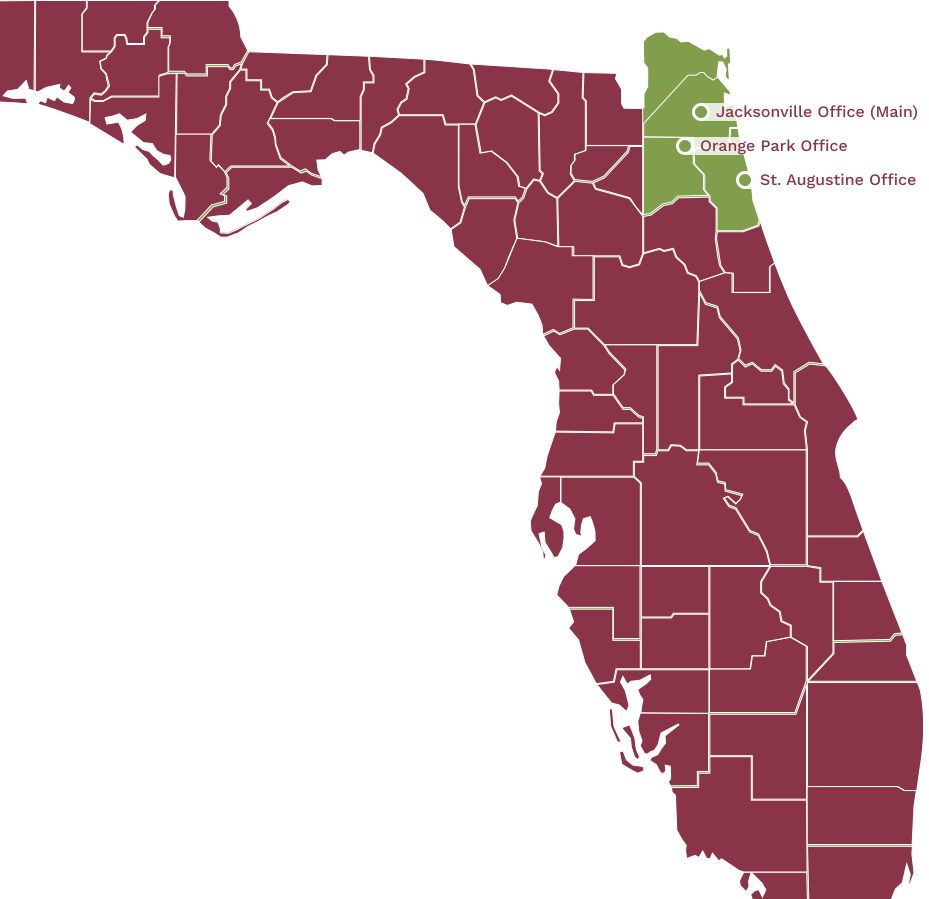
At Berg Bryant Elder Law Group, our Florida Board Certified Elder Law Attorneys help Northeast Florida families evaluate guardianship options, including guardian advocacy and alternatives that avoid court entirely. We serve Duval, Nassau, St. Johns, and Clay Counties.
If you are weighing these options for someone you love, contact our office and tell us about the situation. We can help you find the least restrictive path that still protects them.
This article is for general information and is not legal advice. Florida guardianship law is fact-specific, so speak with one of our elder law professionals about your circumstances.
Author Bio

Kellen Bryant, Esq.
Founder
Florida Bar Board Certified Elder Law Attorney, Kellen Bryant focuses his law practice on advising and helping caregivers with a particular focus on asset protection and preservation from long-term care costs, creditors, and predators. Kellen Bryant is AV Preeminent® Rated, meaning his attorney peers rated him at the highest level of professional excellence. Kellen Bryant was nominated and selected as a Super Lawyer, Rising Star: 2022.