Parents who raise this question are rarely acting out of spite. More often, there is an estranged child, a struggling one, or a situation where leaving an equal share would do real harm. The question is whether Florida law lets you make that choice.
Learning how to disinherit a child in Florida starts with a reassuring answer and an important exception. Florida generally allows a parent to leave an adult child nothing. Florida’s homestead rules, however, can override your wishes entirely, and that is where most plans fail.
Can You Disinherit a Child in Florida?
Yes, for adult children. Florida does not require you to leave any part of your estate to an adult son or daughter, and no forced share protects them.
Two important limits:
- A surviving spouse cannot be fully disinherited. Florida’s elective share generally entitles a surviving spouse to 30 percent of the elective estate.
- Florida homestead property has special inheritance restrictions when you are survived by a spouse or a minor child, regardless of what your will says.
Florida generally allows parents to disinherit adult children, and it does not give children a mandatory share of every parent’s estate. However, Florida’s homestead restrictions can prevent a parent from leaving qualifying homestead property to someone else when a spouse or minor child survives. A surviving spouse also has separate elective-share rights that may affect the estate plan.
How Do Florida’s Homestead Rules Change the Outcome?
This is the single biggest trap, and it surprises nearly everyone.
Under Florida Statute 732.4015, which restates the State Constitution, homestead property is not subject to devise if the owner is survived by a spouse or a minor child. The homestead may be devised to the owner’s spouse only if there is no minor child.
What this means in practice:
- A will leaving the homestead to someone else is ineffective where a spouse or minor child survives
- The property instead passes under Florida’s homestead descent rules
- Putting the home in a revocable trust does not avoid this. The statute treats the grantor of such a trust as the owner and a disposition by trust as a devise
Families regularly assume a trust solves the homestead problem. Where a spouse or minor child survives, the restriction reaches the trust too.
What Is a Pretermitted Child and Why Does It Matter?
Florida protects children who appear to have been forgotten rather than deliberately excluded.
Under Florida Statute 732.302, when a testator omits to provide by will for a child born or adopted after making the will, that child generally receives a share equal to what they would have received had the testator died intestate. Statutory exceptions apply, including where the omission appears intentional or where provision was made outside the will.
The practical lesson is about timing. A will signed before a child was born, with no language addressing later children, can produce an inheritance you never intended. Updating the document after every birth or adoption prevents this.
Why Do No-Contest Clauses Not Work in Florida?
Many parents ask for a clause disinheriting anyone who challenges the will. In Florida, that clause does nothing.
Florida Statute 732.517 states that a provision in a will purporting to penalize any interested person for contesting the will or instituting other proceedings relating to the estate is unenforceable. Florida applies a comparable rule to trusts.
This matters because no-contest language is common in do-it-yourself documents and in forms drafted for other states. Relying on it in Florida creates false confidence. What actually reduces disputes is clear drafting, proper execution, and documentation of your intent.
How Should Disinheritance Actually Be Documented?
Silence is the mistake. Omitting a child’s name without explanation invites the argument that the omission was accidental.
Better practice:
- Name the child explicitly and state that you are intentionally making no provision for them
- Avoid explaining why in the document itself, since stated reasons can be disputed later
- Consider a nominal gift only after weighing it with your attorney, as views differ on whether this helps
- Keep the will current, particularly after births, adoptions, marriages, and divorces
- Use proper execution formalities, with the required witnesses and notarization
- Coordinate everything, because beneficiary designations on life insurance, retirement accounts, and payable-on-death accounts pass outside the will and will override it
- Document capacity at signing, especially if a challenge seems likely
That coordination point does more work than any clause. A will disinheriting a child means nothing if an old retirement account still names them.
What Alternatives Serve Families Better?
Complete disinheritance is not always the right tool for the underlying worry.
- A trust with controlled distributions, releasing funds over time or for specific purposes, protects a child who struggles with money without cutting them off
- A special needs trust preserves a disabled child’s eligibility for needs-based benefits, which an outright inheritance would jeopardize
- Unequal shares rather than exclusion can reflect lifetime help already given, such as tuition or a down payment
- A lifetime gift lets you see the outcome and adjust your plan while you are still here to do it
- A letter of explanation kept separate from the will can tell your family why, without putting disputed reasoning into the document itself
If a child receives public benefits, leaving them an outright share is often the more damaging choice. Our page on trusts covers how these structures work.
Making Your Intentions Hold Up Under Florida Law
Florida permits a parent to disinherit an adult child, but the plan has to account for homestead restrictions that override a will where a spouse or minor child survives, for the pretermitted child statute when a will predates a birth or adoption, and for the fact that no-contest clauses are unenforceable here.
Clear, explicit drafting with coordinated beneficiary designations is what makes your intentions hold. Vague omissions are what unravel.
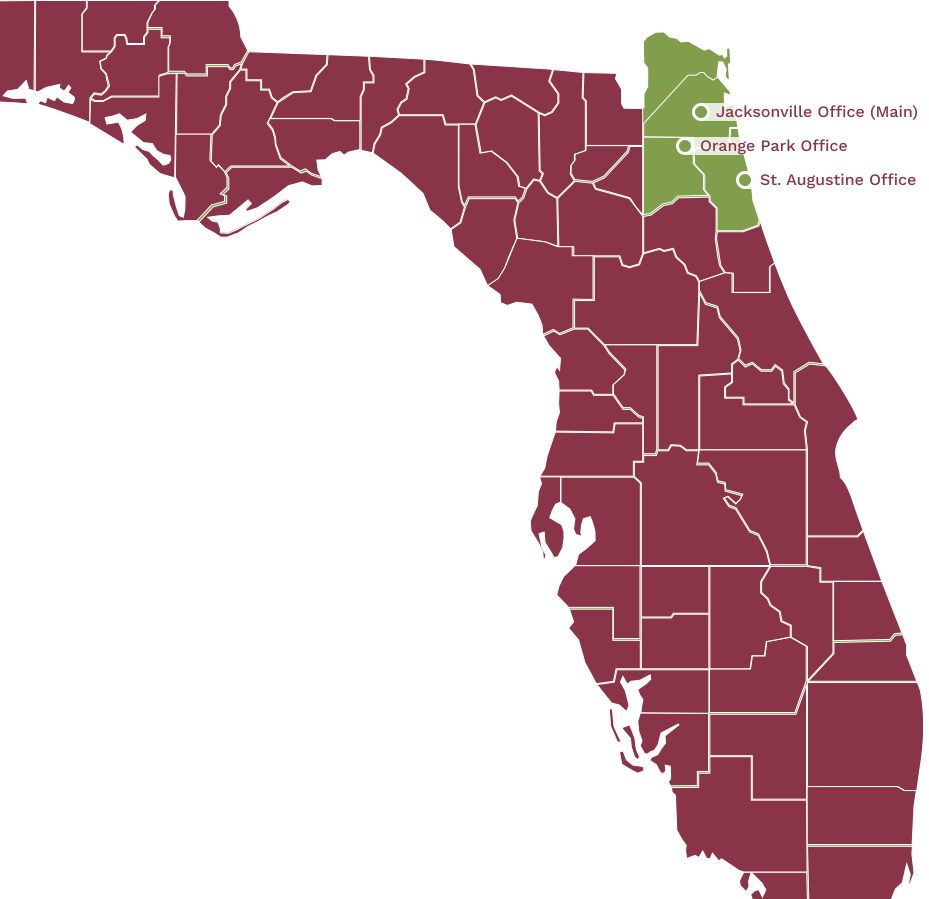
At Berg Bryant Elder Law Group, our Florida Board Certified Elder Law Attorneys build estate plans that say what families mean, serving Duval, Nassau, St. Johns, and Clay Counties.
If you are considering how to structure your plan, contact our office and tell us about your situation.
This article is for general information and is not legal advice. Florida inheritance rules are fact-specific, so speak with one of our elder law professionals.
Author Bio

Kellen Bryant, Esq.
Founder
Florida Bar Board Certified Elder Law Attorney, Kellen Bryant focuses his law practice on advising and helping caregivers with a particular focus on asset protection and preservation from long-term care costs, creditors, and predators. Kellen Bryant is AV Preeminent® Rated, meaning his attorney peers rated him at the highest level of professional excellence. Kellen Bryant was nominated and selected as a Super Lawyer, Rising Star: 2022.