Families ask this question from both directions. Some are parents wondering whether the plan they just signed will survive. Others are adult children who opened a will and found something they did not expect.
Whether children can contest a will in Florida has a short answer and a much more useful long one. Yes, in limited circumstances, on specific legal grounds, within a window that closes fast. For most families, the more valuable information is what makes a will hold up in the first place.
Can a Child Challenge a Parent’s Will in Florida?
A child can raise a challenge only as an interested person, and only on recognized legal grounds. Being disappointed by a will is not one of them.
Florida does not entitle adult children to any share of a parent’s estate. A parent may leave an adult child nothing, and doing so is not itself a basis for challenge. What can be challenged is whether the document is legally valid.
The recognized grounds generally include:
- Improper execution, meaning the will was not signed and witnessed as Florida law requires
- Lack of testamentary capacity at the time of signing
- Undue influence by someone who overcame the person’s free will
- Fraud or forgery
- Duress
Notably, a later valid will generally revokes an earlier one, so a child preferring the terms of an older document has no claim on that basis alone.
What Is the Deadline to Challenge a Will in Florida?
This is the detail that resolves most situations before anything else is considered.
Under Florida Statute 733.212, an interested person served with a copy of the notice of administration must file any objection challenging the validity of the will, the venue, or the court’s jurisdiction on or before the date three months after service. The statute states that objections not filed in that window are forever barred, and Florida courts apply it strictly.
Two practical consequences:
- The clock starts at service of the notice, not at the date of death or when someone happens to learn the terms
- Three months passes quickly, particularly when a family is grieving and spread across states
Trust challenges follow a different timeline, generally tied to disclosure by the trustee.
Who Carries the Burden of Proof?
Florida splits this, and the allocation explains why valid wills usually stand.
Under Florida Statute 733.107, the proponent of the will first establishes prima facie its formal execution and attestation. A self-proving affidavit executed under Florida Statute 732.503 accomplishes that. From there, the person challenging the will carries the burden of establishing the grounds they have raised.
There is one significant exception. When a challenger shows a confidential relationship, a substantial benefit under the document, and active procurement by the person who benefited, a presumption of undue influence arises, and the statute shifts the burden of proof.
Florida assesses active procurement using non-exclusive factors from In re Estate of Carpenter, including whether the beneficiary selected the attorney, instructed them on the terms, arranged the witnesses, was present at signing, or kept the original document.
Why Do No-Contest Clauses Not Help in Florida?
Many parents ask for a clause disinheriting anyone who challenges the will. In Florida, that clause has no effect.
Florida Statute 732.517 provides that a provision in a will purporting to penalize any interested person for contesting the will or instituting other proceedings relating to the estate is unenforceable. Florida applies a comparable rule to trusts.
This surprises people who used an out-of-state form or an online template where such clauses do carry weight. Relying on one in a Florida plan creates confidence that the law does not support.
What Actually Makes a Florida Will Hold Up?
For parents, this is the part worth acting on. The strength of a plan is built at signing, not defended afterward.
- Work with a Florida attorney. Execution formalities are specific, and out-of-state forms frequently fail them.
- Use a self-proving affidavit, which establishes formal execution and attestation without needing witnesses later.
- Meet with the attorney alone. No beneficiary present, on the call, or involved in giving instructions.
- Document capacity at the time of signing, particularly where health is declining.
- Let the person choose their own attorney, rather than one a beneficiary recommended.
- Plan early. Documents signed years before any decline are far more durable than ones signed shortly after a diagnosis.
- Coordinate everything. Beneficiary designations on life insurance, retirement accounts, and payable-on-death accounts pass outside the will entirely and override it.
- Tell the family. Most disputes begin with surprise. An unequal plan explained in advance rarely becomes a fight.
Does a Trust Avoid These Problems?
A funded trust helps in several ways, though it is not immune.
A trust keeps assets out of probate, which means no notice of administration and a private administration rather than a public court file. Many families find that the reduced visibility alone removes the friction that leads to disputes.
A trust can still be challenged on similar grounds, including undue influence and capacity, and Florida’s unenforceability rule for penalty clauses reaches trusts as well. What a trust offers is privacy, continuity, and a structure that can include clear reporting duties. Our page on trusts explains how these are built, and our probate page covers what administration involves when there is no trust.
Keeping a Florida Estate Plan Out of Dispute
Children can challenge a parent’s will in Florida only as interested persons, only on grounds such as improper execution, lack of capacity, undue influence, fraud, or duress, and generally only within three months of being served with the notice of administration.
For parents, the lesson runs the other way. Independent legal advice, documented capacity, proper execution with a self-proving affidavit, coordinated beneficiary designations, and a family that is not surprised are what keep a plan intact.
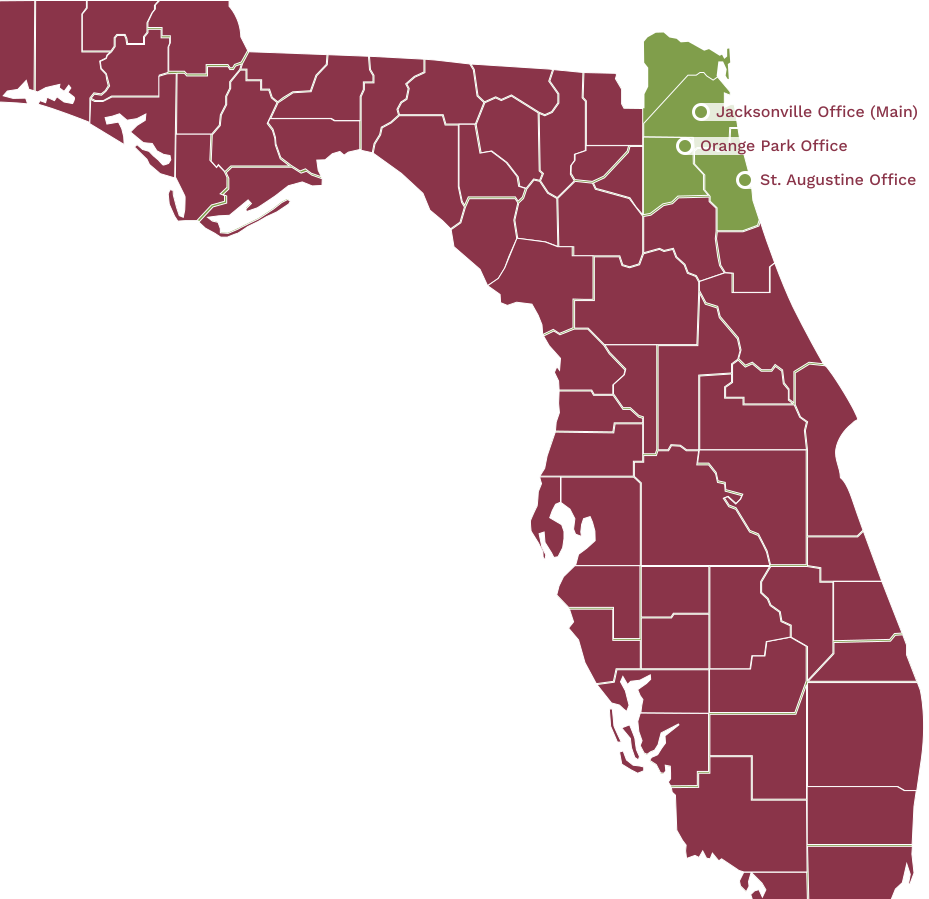
At Berg Bryant Elder Law Group, our Florida Board Certified Elder Law Attorneys build estate plans designed to last for families in Duval, Nassau, St. Johns, and Clay Counties.
If you want a plan that holds together, contact our office and tell us about your family.
This article is for general information and is not legal advice. Florida estate matters are fact-specific, so speak with one of our elder law professionals.
Author Bio

Kellen Bryant, Esq.
Founder
Florida Bar Board Certified Elder Law Attorney, Kellen Bryant focuses his law practice on advising and helping caregivers with a particular focus on asset protection and preservation from long-term care costs, creditors, and predators. Kellen Bryant is AV Preeminent® Rated, meaning his attorney peers rated him at the highest level of professional excellence. Kellen Bryant was nominated and selected as a Super Lawyer, Rising Star: 2022.