A parent changes their will late in life. One child was driving them to appointments, sitting in on meetings, and handling the paperwork. That child’s share goes up. Everyone else learns about it afterward.
Undue influence in Florida estate planning is the legal concept that governs situations exactly like that one. It does not mean persuasion, and it does not mean a parent made a choice their family dislikes. It means someone overpowered the parent’s free will. Knowing how Florida defines it helps families plan in ways that keep their wishes intact.
What Does Undue Influence Mean Under Florida Law?
Neither the probate code nor the trust code defines the term precisely. In practice, undue influence means conduct that overcomes the free agency of the person making the document, so the resulting will or trust reflects someone else’s intent rather than their own.
The distinction matters:
- Not undue influence: a child asking a parent to be included, a parent rewarding a caregiver, or a plan that favors one child over another
- Potentially undue influence: isolating a parent, controlling their information, and procuring a document that substantially benefits the influencer
Florida courts focus less on the outcome than on how the document came to exist. An unequal plan is not suspicious on its own. An unequal plan arranged entirely by the person who benefits is a different matter.
How Does Florida’s Presumption of Undue Influence Work?
Florida uses a burden-shifting framework rather than a single test.
Under Florida Statute 733.107, the proponent of a will first establishes prima facie its formal execution and attestation. A self-proving affidavit executed under Florida Statute 732.503 accomplishes this. The burden then rests on the person challenging the will.
A presumption of undue influence arises when three elements are shown:
- A confidential or fiduciary relationship between the person and the alleged influencer
- A substantial benefit to that person under the document
- Active procurement of the document by that person
When those are established, the statute provides that the presumption implements public policy against abuse of fiduciary or confidential relationships and shifts the burden of proof. The person who benefited then must come forward with a reasonable explanation for their involvement.
What Does Active Procurement Look Like?
Florida courts assess active procurement using a set of non-exclusive factors drawn from the Florida Supreme Court’s decision in In re Estate of Carpenter. Courts have been clear that not every factor must be present.
These factors look at whether the beneficiary:
- Was present when the person signed the document
- Was present when the person expressed a desire to make it
- Recommended or selected the attorney who prepared it
- Knew the contents of the document before it was signed
- Gave instructions to the attorney about its terms
- Arranged for or secured the witnesses
- Kept the document after it was executed
Read that list as a planning checklist in reverse. Each item describes something a beneficiary should avoid doing if the family wants the plan to stand.
How Can Families Prevent Undue Influence Claims?
This is where the concept becomes useful rather than theoretical. Most concerns are preventable through how the plan is made.
Practices that protect a plan:
- The person meets with the attorney alone. No beneficiary in the room, on the call, or in the hallway.
- The person chooses their own attorney rather than using one a beneficiary recommended.
- No beneficiary communicates instructions to the attorney on the person’s behalf.
- Capacity is documented at the time of signing, including a physician’s note where decline is a concern.
- Execution formalities are followed exactly, including a self-proving affidavit.
- The reasoning is recorded separately, through the attorney’s notes rather than in the document itself.
- The family is told in advance when a plan is unequal, because surprise is what drives disputes.
- Plans are made early, since documents signed years before decline are far less vulnerable than ones signed weeks after a diagnosis.
A beneficiary who drives a parent to the office and waits in the car has done nothing wrong. A beneficiary who selects the lawyer, explains what the parent wants, and keeps the signed original has created exactly the pattern Florida scrutinizes.
Who Is Most Vulnerable to Undue Influence?
Certain circumstances raise the risk considerably.
- Isolation, especially when one person controls visitors and phone access
- Cognitive decline, including early dementia
- Dependence on a caregiver for daily needs
- Recent loss of a spouse, when grief and reliance combine
- A new relationship that appears alongside sudden interest in finances
- Sudden changes to long-standing documents, particularly ones that cut out family members
If you are caring for a parent in one of these situations, the protective move is transparency. Keep other family members informed, keep the parent connected to people outside the household, and keep yourself out of the drafting process entirely.
How Does This Apply to Trusts and Other Documents?
The analysis is not limited to wills. Florida applies the same framework to trusts, and the concept reaches other transactions as well, including beneficiary designations, deeds, and powers of attorney.
That breadth matters for planning. A carefully executed will offers little protection if a beneficiary designation or a deed was changed under the same circumstances. Reviewing every document together, as our page on trusts describes, keeps the whole plan consistent.
Deadlines also differ by instrument. For wills, an interested person served with a notice of administration generally has three months to raise an objection, and Florida courts enforce that window strictly.
Protecting a Florida Estate Plan From Influence Claims
Undue influence in Florida turns on whether someone overcame a person’s free will, assessed through a confidential relationship, a substantial benefit, and active procurement that shifts the burden of proof.
For families, the practical value is preventive. Independent legal advice, documented capacity, proper execution, and honest communication about unequal plans do more to protect a parent’s wishes than any clause in a document.
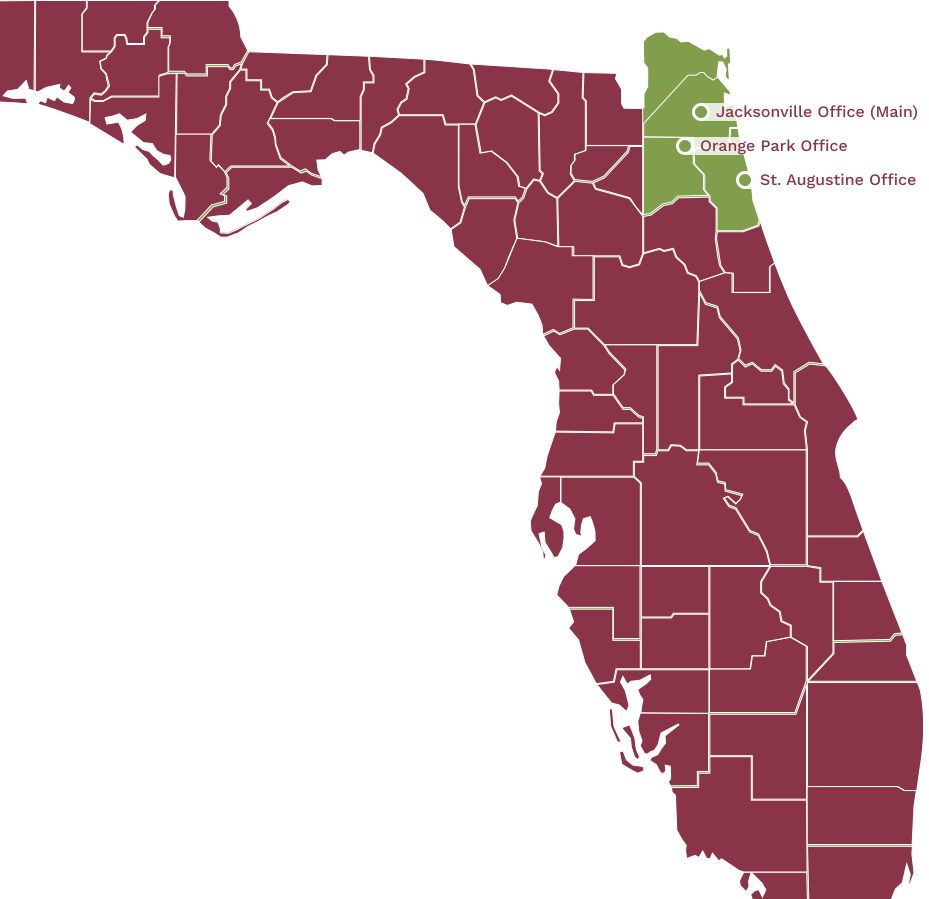
At Berg Bryant Elder Law Group, our Florida Board Certified Elder Law Attorneys build estate plans designed to hold up, for families in Duval, Nassau, St. Johns, and Clay Counties.
If you are planning in a situation where family tension is likely, contact our office and tell us about it.
This article is for general information and is not legal advice. Speak with one of our elder law professionals about your family’s circumstances.
Author Bio

Kellen Bryant, Esq.
Founder
Florida Bar Board Certified Elder Law Attorney, Kellen Bryant focuses his law practice on advising and helping caregivers with a particular focus on asset protection and preservation from long-term care costs, creditors, and predators. Kellen Bryant is AV Preeminent® Rated, meaning his attorney peers rated him at the highest level of professional excellence. Kellen Bryant was nominated and selected as a Super Lawyer, Rising Star: 2022.