Families usually wait too long. They notice a new “friend” handling Mom’s banking, or a withdrawal nobody can explain, and they spend weeks debating whether it is bad enough to say something. Meanwhile, the account keeps draining.
Knowing how to report elder financial abuse in Florida removes most of that hesitation. You do not need proof, you do not need to identify who did it, and under Florida law reporting is not merely allowed. For a suspected vulnerable adult, it is required.
How Do You Report Elder Financial Abuse in Florida?
Call the Florida Abuse Hotline at 1-800-96-ABUSE (1-800-962-2873). The hotline operates around the clock, and reports can also be submitted online or by fax through the Department of Children and Families.
Florida Statute 415.1034 requires any person who knows, or has reasonable cause to suspect, that a vulnerable adult has been or is being abused, neglected, or exploited to immediately report that knowledge or suspicion to the central abuse hotline.
The statute names categories of reporters specifically, including:
- Physicians, nurses, paramedics, and hospital personnel
- Nursing home and assisted living facility staff
- Bank, savings and loan, or credit union officers, trustees, and employees
- Dealers, investment advisers, and associated persons under chapter 517
- Members of Disability Rights Florida and representatives of the State Long-Term Care Ombudsman Program
The reporting duty is not limited to that list. It applies to any person with reasonable cause to suspect.
What Counts as Financial Exploitation?
Exploitation generally involves someone in a position of trust or confidence using a vulnerable adult’s funds or property improperly, or using deception or intimidation to obtain them.
Common patterns:
- Unexplained withdrawals or transfers from accounts
- New names added to bank accounts, deeds, or titles
- A sudden change to a will, trust, power of attorney, or beneficiary designation
- Missing property, including jewelry, vehicles, or valuables
- Unpaid bills despite adequate income
- A new person isolating your parent and controlling access to them
- Signatures that look wrong or documents your parent cannot explain
- Pressure or secrecy around money
Who is a vulnerable adult depends on the person’s condition rather than age alone, and typically involves someone whose ability to care for or protect themselves is impaired.
What Happens After You Make a Report?
Knowing the process makes the call easier.
- The hotline screens the report and determines whether it requires an immediate onsite protective investigation
- A protective investigation generally begins within 24 hours of a report alleging abuse, neglect, or exploitation
- An investigator may speak with your parent, family members, caregivers, and financial institutions
- Law enforcement may investigate separately, either concurrently with or independently of the department’s investigation
- Protective services may be offered to safeguard the adult’s well-being
One point that stops many people from calling: your identity as the reporter is protected. The identity of a person reporting abuse, neglect, or exploitation of a vulnerable adult may not be released without that person’s written consent, except to specified officials such as department staff, the state attorney, or law enforcement.
Also worth knowing: if the adult has capacity to consent and refuses emergency protective services, those services generally may not be provided. Florida law preserves the right of a capable adult to make their own choices.
What Information Should You Have Ready?
You do not need all of this to call, but more detail helps.
- Your parent’s name, address, and phone number
- Their age and a description of their condition or impairment
- The name, address, and phone number of each person you suspect
- What you observed, with dates and amounts where possible
- The relationship between your parent and the suspected person
- Names of others who may know what is happening
- Your own name and contact information
Bring documents if you have them, including bank statements, changed legal documents, or correspondence.
Where Else Can Families Turn?
The abuse hotline is the primary route, and several other resources address different parts of the problem.
- Local law enforcement, by calling 911 if your parent is in immediate danger
- The Florida Attorney General’s Office, at 1-866-966-7226, for scam and fraud complaints
- The bank or brokerage, since financial institutions may report suspected exploitation and can flag or freeze suspicious activity
- Adult Protective Services through the Florida Department of Elder Affairs Elder Helpline at 1-800-963-5337
- The Long-Term Care Ombudsman Program, when the concern involves a facility
Act rather than wait. Money that has already moved is considerably harder to recover than money still in the account.
How Can Families Prevent Financial Exploitation?
Prevention works better than response, and most of it is structural.
- Put proper legal authority in place early. A durable power of attorney naming someone trustworthy, signed while your parent still understands it, prevents a vacuum that opportunists fill.
- Build in oversight. Having more than one family member receive account summaries creates accountability.
- Use a trust with defined trustee reporting duties, as our page on trusts explains.
- Keep your parent connected. Isolation is the condition exploitation depends on.
- Watch for new relationships that arrive alongside sudden interest in finances.
- Review statements regularly with your parent rather than for them.
If your parent has already lost the capacity to sign documents and someone is taking advantage, guardianship may be the available route to protect them.
Taking Action When a Parent’s Money Is at Risk
Reporting suspected financial exploitation in Florida means calling 1-800-96-ABUSE, and Florida law obligates anyone with reasonable cause to suspect it to report immediately. Your identity is protected, a protective investigation generally starts within 24 hours, and you do not need to be certain before you call.
Reporting addresses the immediate danger. Legal authority and oversight are what keep it from recurring.
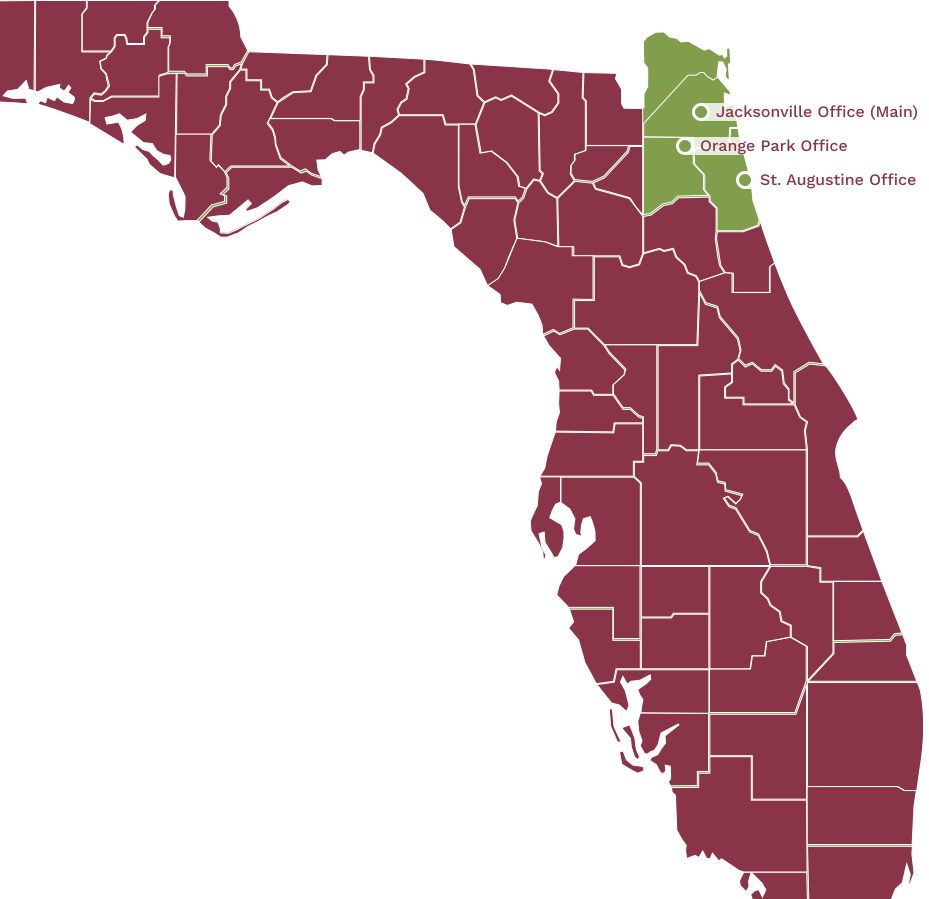
At Berg Bryant Elder Law Group, our Florida Board Certified Elder Law Attorneys help families in Duval, Nassau, St. Johns, and Clay Counties protect vulnerable adults and their assets.
If you are worried about a parent’s finances, contact our office and tell us what you have seen.
This article is for general information and is not legal advice. If you suspect a vulnerable adult is being abused, neglected, or exploited, call the Florida Abuse Hotline at 1-800-962-2873. For legal guidance, speak with one of our elder law professionals.
Author Bio

Kellen Bryant, Esq.
Founder
Florida Bar Board Certified Elder Law Attorney, Kellen Bryant focuses his law practice on advising and helping caregivers with a particular focus on asset protection and preservation from long-term care costs, creditors, and predators. Kellen Bryant is AV Preeminent® Rated, meaning his attorney peers rated him at the highest level of professional excellence. Kellen Bryant was nominated and selected as a Super Lawyer, Rising Star: 2022.