You moved money to cover your mother’s assisted living deposit. You used her debit card for groceries because she asked you to. Now a sibling who lives three states away is asking why her balance dropped, and the word being used is not “mistake.”
Knowing what to do when family members accuse you of financial abuse starts with separating two things that feel identical in the moment: a family disagreement and a formal process. The response that protects you is the same in both cases, and it is built almost entirely on records.
What Should You Do First When You Are Accused?
Respond with documentation rather than argument. Accusations between relatives usually come from incomplete information, and the fastest way to resolve them is to make the full picture visible.
Immediate steps:
- Stay calm and stay engaged. Going silent looks like concealment, even when it is just hurt feelings.
- Stop any transaction you are unsure about until you can explain it clearly.
- Gather records of every transfer, purchase, and payment you handled.
- Write a timeline of what you did and why, while your memory is fresh.
- Avoid retaliating or cutting other relatives off from information about your parent.
- Get your own legal guidance early, before responding in writing to anything formal.
The relative who can produce an organized record of where the money went is in a fundamentally different position than the one who cannot.
How Does Florida’s Reporting and Investigation Process Work?
Florida takes reports about vulnerable adults seriously, and almost anyone can make one.
Under Florida Statute 415.1034, any person who knows or has reasonable cause to suspect that a vulnerable adult is being abused, neglected, or exploited must immediately report it to the central abuse hotline. Certain professionals are named specifically, including physicians, nurses, and bank, savings and loan, or credit union officers, trustees, and employees.
If a report is made:
- The Department of Children and Families receives it through the central abuse hotline
- A protective investigation generally begins within 24 hours of a report alleging abuse, neglect, or exploitation
- An investigator may contact your parent, you, and others involved
- The reporter’s identity is protected and is not released without their written consent
An investigation is an inquiry, not a finding. Many close with no action because the explanation turns out to be ordinary.
Why Do These Accusations Happen Between Relatives?
Knowing the usual causes helps you address the real problem instead of the stated one.
Common triggers:
- No shared visibility. One adult child handles everything and the others see only account balances dropping.
- Spending that looks unusual without context. A large withdrawal for a deposit, home repair, or medical bill reads very differently without the invoice attached.
- Informal caregiver payment. Taking compensation without a written agreement is one of the most frequent sources of suspicion.
- Commingled accounts. Using one account for your money and your parent’s makes clean explanation nearly impossible.
- Old family dynamics. Long-standing resentments surface when a parent declines.
- Genuine concern. Sometimes a sibling is wrong but not acting in bad faith.
What Records Protect You as an Agent or Caregiver?
If you hold a power of attorney or manage a parent’s money, you are a fiduciary. That status comes with duties and the expectation that you can account for what you did.
Practices that protect you:
- Keep your parent’s funds completely separate from your own accounts
- Save receipts and invoices for anything you pay on their behalf
- Log every transaction with the date, amount, purpose, and payee
- Never use their funds for personal expenses, even short-term with intent to repay
- Put caregiver compensation in writing before any payment, at a reasonable rate, with timesheets
- Document gifts your parent directs, including their capacity to direct them
- Share summaries with family on a regular schedule rather than on demand
That last point prevents more accusations than anything else. A quarterly one-page summary to siblings costs an hour and removes the information vacuum that suspicion grows in.
Caregiver payment deserves particular care. Informal cash transfers with no agreement can both trigger family suspicion and create problems later if your parent applies for long-term care Medicaid, which includes a 60-month look-back period for certain asset transfers. Our look-back period page explains how that works.
How Can Families Prevent This Entirely?
The structures that prevent accusations are the same ones that make caregiving easier.
- Use proper legal authority. A durable power of attorney defines what you may do and makes your role clear.
- Consider a trust. A trust can name a trustee with defined reporting duties to named beneficiaries.
- Build in transparency from the start. Agree on who receives summaries and how often, before anyone is managing money.
- Divide roles. One sibling handling finances and another handling medical care creates natural accountability.
- Put caregiver agreements in writing at the outset.
- Involve a professional where family trust is already strained.
Responding to Family Accusations About a Parent’s Finances
Being accused of mishandling a parent’s money is painful, particularly when you are the one who showed up. The response that works is not a stronger denial. It is clean records, separate accounts, written agreements, and regular communication with the relatives who are not in the room.
If you are managing a parent’s finances and none of that structure exists yet, building it now protects your parent and you.
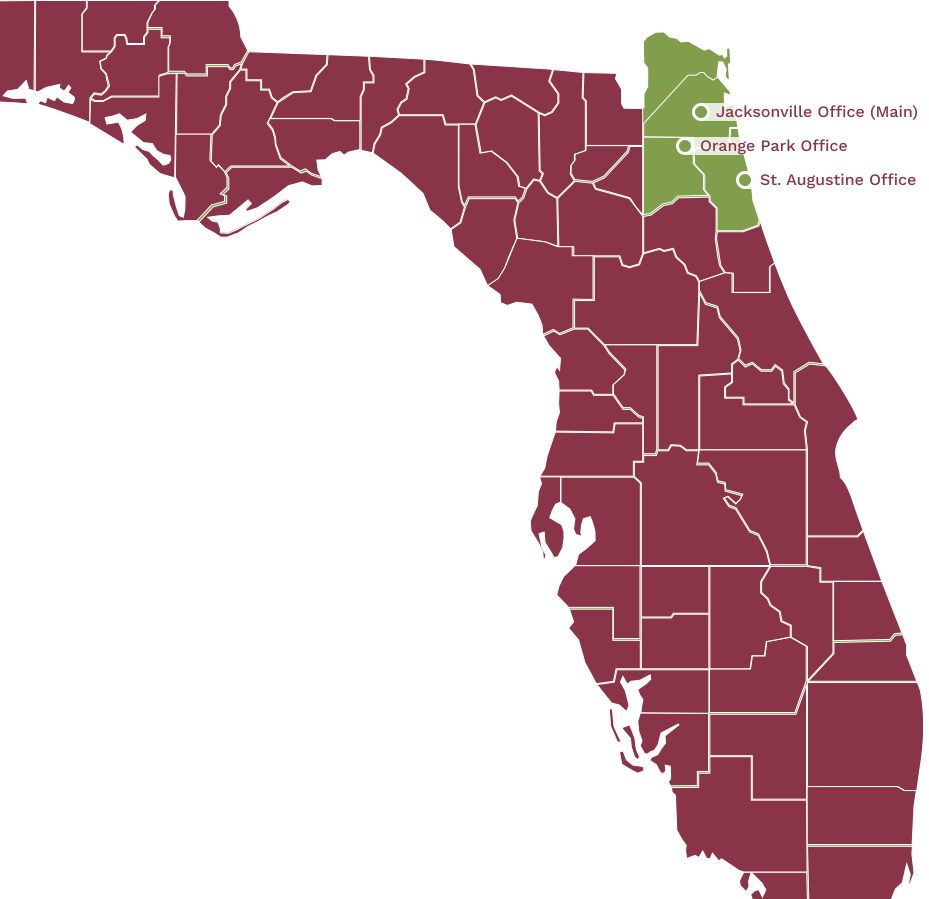
At Berg Bryant Elder Law Group, our Florida Board Certified Elder Law Attorneys help families in Duval, Nassau, St. Johns, and Clay Counties set up powers of attorney, trusts, and caregiver agreements that keep roles clear.
If your family is in a difficult place over a parent’s finances, contact our office and tell us about the situation.
This article is for general information and is not legal advice. Speak with one of our elder law professionals about your circumstances.
Author Bio

Kellen Bryant, Esq.
Founder
Florida Bar Board Certified Elder Law Attorney, Kellen Bryant focuses his law practice on advising and helping caregivers with a particular focus on asset protection and preservation from long-term care costs, creditors, and predators. Kellen Bryant is AV Preeminent® Rated, meaning his attorney peers rated him at the highest level of professional excellence. Kellen Bryant was nominated and selected as a Super Lawyer, Rising Star: 2022.