Most families do not decide this question once. They circle it for months, reassured by a good phone call on Tuesday and alarmed by a missed appointment on Friday. The uncertainty itself is exhausting.
Figuring out how to tell if your elderly parent is safe living alone works better as an assessment than as a gut feeling. Specific, observable things predict risk, and most of them are visible during an ordinary visit if you know where to look. Checking them deliberately beats waiting for the fall that forces the decision.
How Do You Know If a Parent Is Safe Living Alone?
Look at whether your parent can still manage the activities that independent living actually requires. Professionals split these into two groups.
Basic daily activities:
- Bathing and grooming
- Dressing
- Eating
- Using the toilet
- Moving from a bed to a chair without help
More complex daily activities:
- Managing medications correctly
- Preparing meals
- Handling money and paying bills
- Shopping for groceries
- Housekeeping and laundry
- Using the phone
- Driving or arranging transportation
The second group usually slips first. A parent who still bathes and dresses without help but has stopped cooking, stopped paying bills on time, and stopped driving at night is showing a pattern worth taking seriously.
What Should You Look for During a Visit?
Walk through the house with fresh eyes rather than sitting in the living room.
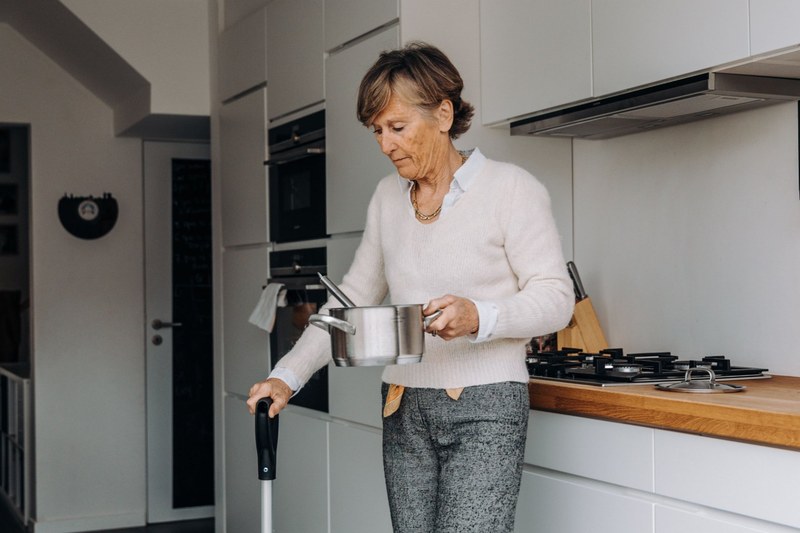
- The kitchen. Expired or spoiled food, an empty refrigerator, or scorched pots suggest cooking has become difficult or unsafe.
- Medications. Count pills against the fill date. Bottles that are too full or too empty both signal a problem.
- The mail. Stacks of unopened envelopes, late notices, or duplicate payments point to trouble managing money.
- Laundry and housekeeping. A sharp drop from your parent’s normal standard matters more than any absolute level of tidiness.
- Your parent. Weight loss, poor hygiene, bruising, or clothes that no longer fit deserve attention.
- The car. New dents and scrapes often tell you about driving before anyone admits there is an issue.
What Are the Biggest Safety Risks at Home?
Some hazards matter more than others because of what they lead to.
- Falls. Loose rugs, poor lighting, missing grab bars, and stairs without rails are the most common and most consequential hazards.
- Medication errors. Missed doses, doubled doses, and mixed-up bottles can cause serious harm quickly.
- Fire and kitchen safety. A stove left on, or smoke alarms with dead batteries, create risk that compounds when reaction time slows.
- Wandering or confusion. Getting lost on a familiar route is a different category of concern and usually means supervision is needed.
- Financial vulnerability. A parent who struggles with bills is also more susceptible to scams and pressure from people around them.
- Emergency response. Ask directly: if your parent fell at 2 a.m., how would anyone know?
Many of these have straightforward fixes. Grab bars, better lighting, a medication organizer, and a medical alert device address a surprising share of the risk without anyone moving.
What If Your Parent Insists They Are Fine?
Expect that. For most older adults, this conversation is about losing independence, not about logistics.
Approaches that tend to work better:
- Ask questions instead of delivering conclusions. “How are you managing the stairs?” lands differently than “You can’t stay here.”
- Name your own worry rather than their decline.
- Start with small additions, such as a cleaning service or grocery delivery, which are easier to accept than a move.
- Bring in an outside voice. A physician or longtime friend can sometimes say what an adult child cannot.
- Separate safety from preference. Some risk is your parent’s to accept. Immediate danger is a different conversation.
A capable adult has the right to make choices you disagree with, including risky ones. That principle has limits when capacity is genuinely in question, but it is the starting point.
When Should You Get a Professional Assessment?
Sometimes a neutral evaluation settles what family debate cannot.
Consider one when:
- Family members disagree about what they are seeing
- You suspect memory loss but are unsure of its extent
- Your parent dismisses concerns you believe are serious
- You live far away and cannot observe regularly
A physician can evaluate memory, medications, and treatable causes of decline. A geriatric care manager can assess the home and daily function and produce a written plan. In Northeast Florida, the Florida Department of Elder Affairs and its Elder Helpline at 1-800-963-5337 connect families to local assessments and services, and the federal Eldercare Locator does the same nationally. The National Institute on Aging publishes a useful checklist for evaluating whether an older adult needs help.
What Legal Preparation Should Happen Now?
Safety and legal readiness run on the same clock, and the legal side has a deadline most families miss.
Documents to have in place while your parent clearly understands what they are signing:
- Durable power of attorney for financial matters
- Health care surrogate designation for medical decisions
- Living will recording end-of-life wishes
- HIPAA authorization so providers can speak with you
If capacity is lost before these exist, the family’s remaining option is usually guardianship, which is slower, costlier, and decided by a court rather than by your parent.
Care costs deserve early attention too. Medicare does not pay for long-term custodial care, and long-term care Medicaid in Florida has its own income and asset rules, including a 60-month look-back period for certain asset transfers. Our page on 2026 Medicaid income and asset limits covers the current figures.
Deciding Whether Independent Living Still Works for Your Parent
Assessing whether a parent is safe at home means looking at daily function, walking the house, and being honest about what you see rather than what you hope. Many risks can be reduced without a move. Some cannot.
Either way, the legal documents should be handled now, while your parent can still choose who acts for them.
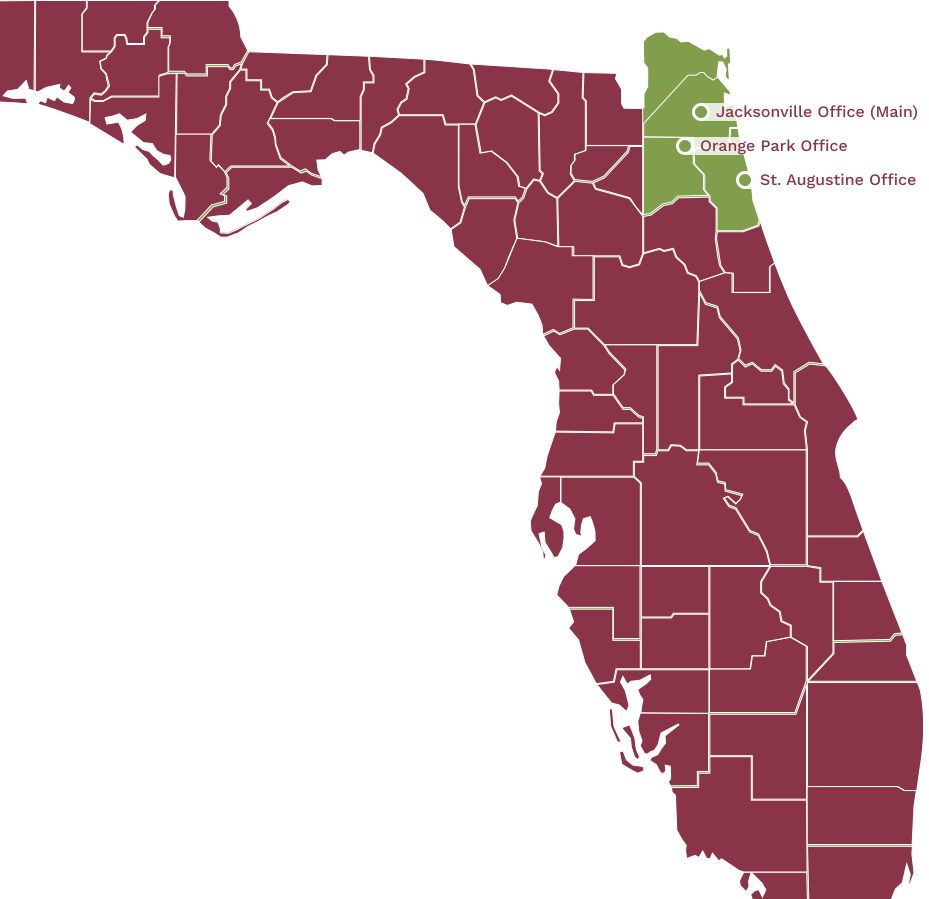
At Berg Bryant Elder Law Group, our Florida Board Certified Elder Law Attorneys help families across Duval, Nassau, St. Johns, and Clay Counties prepare before a crisis forces decisions.
If you are weighing what comes next for a parent, contact our office and tell us what you are seeing.
This article is for general information and is not legal or medical advice. Speak with one of our elder law professionals about your family’s situation.
Author Bio

Kellen Bryant, Esq.
Founder
Florida Bar Board Certified Elder Law Attorney, Kellen Bryant focuses his law practice on advising and helping caregivers with a particular focus on asset protection and preservation from long-term care costs, creditors, and predators. Kellen Bryant is AV Preeminent® Rated, meaning his attorney peers rated him at the highest level of professional excellence. Kellen Bryant was nominated and selected as a Super Lawyer, Rising Star: 2022.